Friday, February 14, 2025

Do the Eyes Speak the Language of Love


As many celebrate Valentine's Day this week, it's a great opportunity to explore how much we can communicate simply by looking at someone we're attracted to. The eyes reveal a great amount of information about a person, including their thoughts and emotions. Love and attraction are often expressed through body language, with the eyes serving as a significant indicator of affection. When verbal cues can't be relied upon, it's helpful to return to nonverbal signals. Here are a few key nonverbal clues to consider:

  • Mutual Gaze -This occurs when two people make eye contact or look into each other's eyes, indicating a shared connection.
  • Eyes and Smiling - A sincere smile combined with prolonged eye contact often signifies a deep connection and attraction. These are strong indicators of romantic interest.
  • Pupil Dilation - The pupils, located at the center of the irises, control their own contraction and dilation. This process is managed by the iris muscles and controlled by the autonomic nervous system. Hormones like oxytocin and dopamine—commonly referred to as "love hormones"—can affect pupil size, making them larger when we feel attraction.
  • Eye Flirting - This refers to flirting through eye contact. Making eye contact can be a powerful way to express interest and establish a connection.
  • Shining Eyes When in Love -This visual expression of strong positive emotions often shows attraction, excitement, or deep affection. It can manifest as a sparkle or gleam in the eyes, which occurs due to increased blood flow and dilated pupils when looking at someone we love.

Of course these are not the only considerations when you think you may be in love, but they are common outward physical signs that have been observed by others.


Sources:
www.kindsight.com
www.psychologytoday.com
www.focusclinics.com

#PearleVisionRobinson
#DrClaudiaWendel
#PittsburghOptometrist
#PittsburghEyeCare


Thursday, February 6, 2025

Down Syndrome and Vision Problems


In the late nineteenth century John Langdon Down, an English physician, was the first to classify (1862) and publish (1866) an accurate description of a person with Down syndrome was also known as "Mongolism”.  

Down syndrome is when a person has an extra copy of chromosome 21. Chromosomes are packages of DNA that contain the genetic material essential for the growth and functioning of an organism. Down syndrome is one of the most common chromosomal abnormalities in children, occurring in approximately one in every 800 births. More than 60% of individuals with Down syndrome experience vision problems.

Down syndrome, manifests, with a wide range of ophthalmology findings. These include:
  • Strabismus
  • Amblyopia
  • Refractive errors
  • Eyelid abnormalities
  • Nasolacrimal duct obstruction
  • Nystagmus excessive tearing
  • Keratoconus
  • Cataracts
  • Retinal abnormalities
  • Optic nerve abnormalities
  • Glaucoma
  • Esotropia
  • Blepharitis

Individuals with Down syndrome have an increased risk of various eye disorders. Fortunately, many of these eye problems can be effectively treated. Due to physical characteristics—such as small noses, shortened depth from the eye socket to the ear, and close-set eyes with wider faces—finding suitably fitting glasses can be challenging. Typical glasses tend to slide down the nose, fall forward, or bow out at the temples, making them difficult to wear.

To address these challenges, there are now a variety of optical frames specifically designed for individuals with Down syndrome. These frames feature adjustable bridges and modified temples to prevent the glasses from slipping.

Common optical lenses used for patients with Down syndrome include transition lenses, high-index lenses, and bifocal designs. Approximately 75% of people with Down syndrome experience reduced accommodation (focusing ability), making bifocals particularly beneficial for many of these people. As a result, regular eye exams are essential for individuals with Down syndrome to monitor their eye health and ensure proper vision care.

Sources:
www.cdc.gov
www.pmc.ncbi.nih.gov
www.optometrists.org

Photos:
https://upload.wikimedia.org/wikipedia/commons/4/47/World_Down_Syndrome_Day_%2833559650428%29.jpg
https://pmc.ncbi.nlm.nih.gov/articles/PMC5130304/figure/g004a/ Fig. 4a
https://pmc.ncbi.nlm.nih.gov/articles/PMC5130304/figure/g004a/ Fig. 4b
https://pmc.ncbi.nlm.nih.gov/articles/PMC5130304/figure/g004a/ Fig. 6


#PearleVisionRobinson
#DrClaudiaWendel
#PittsburghOptometrist
#PittsburghEyeCare


Is Observing Dry January Good for your Eyes


Dry January is a challenge that encourages individuals to abstain from alcohol for the first 31 days of the year. While many are aware that excessive drinking can harm overall health, it is less commonly known that alcohol can also negatively affect eye health. Heavy drinking can impair sexual function, reduce sleep quality, and increase the risk of serious health issues, including certain cancers, cardiovascular diseases, liver damage, and even blindness.

Consuming more than two drinks per day can lead to various eye-related problems, such as: 
• Accelerated age-related macular degeneration (AMD)  
• Increased incidence of diabetic retinopathy
• Links to retinal vein occlusion
• Greater risk of central serous chorioretinopathy  
• Nutritional optic neuropathy
• Increased likelihood of cataracts  
• Dry eye disease  
• Jaundice resulting from liver damage.

By abstaining from alcohol, you may notice that your eyes become brighter and whiter. This improvement occurs as your body works to reverse the damage and yellowing of the white part of your eye. Additionally, as you refrain from drinking, your circulation improves, leading to better oxygen and nutrient delivery to your eyes. This can help prevent diseases and damage, such as glaucoma and macular degeneration.

Within a month of abstaining, your body begins to renew its red blood cells, enhancing blood flow and increasing oxygen supply to vital organs, including the eyes. Good circulation is essential for supporting eye health, as it ensures your eyes receive the necessary oxygen and nutrients.

Sources:
www.allaboutvision.com 
www.nytimes.com 
www.medicalnewstoday.com


#PearleVisionRobinson
#DrClaudiaWendel
#PittsburghOptometrist
#PittsburghEyeCare


Wednesday, January 29, 2025

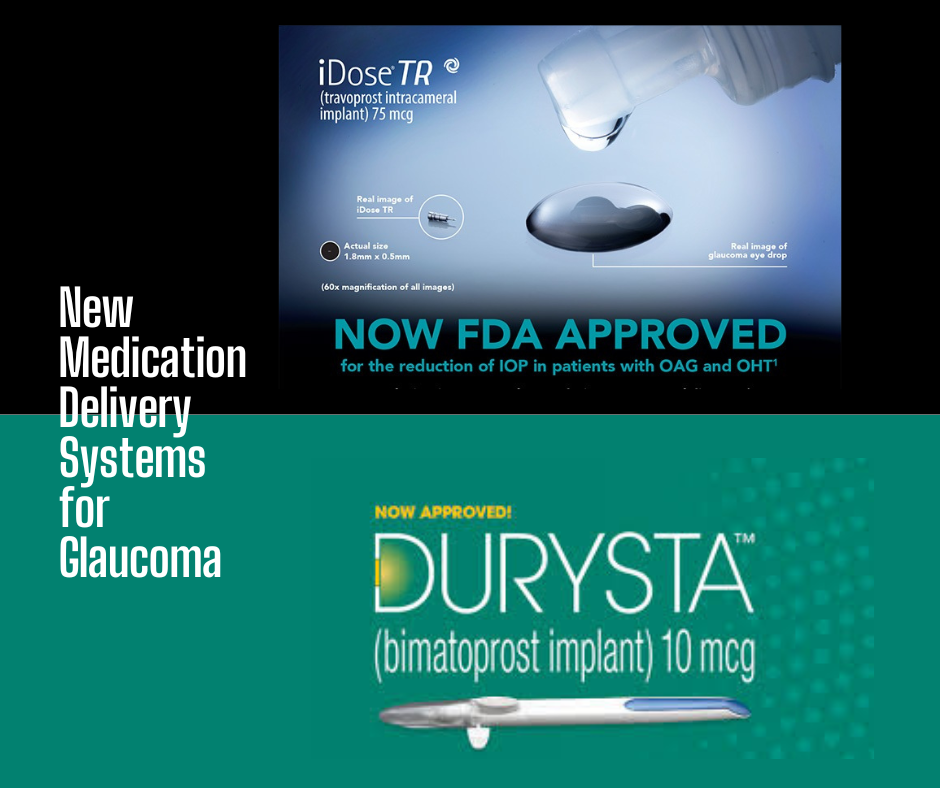
New Medication Delivery Systems for Glaucoma


There is still no cure for glaucoma, but the past year has brought new advances in the treatment of Glaucoma.

It is estimated that 50% of glaucoma patients do not take their medication as prescribed, which has long been a challenge in terms of adherence and compliance.

Sustained-release glaucoma medications can improve treatment efficiency and adherence.
  • Durysta-This is an FDA-approved dissolvable ocular implant that helps lower eye pressure in patients with open-angle glaucoma or elevated intraocular pressure. One implant can provide several months of control over intraocular pressure.
  • iDoseTR This is another FDA-approved treatment that also lowers eye pressure in patients with open-angle glaucoma or high eye pressure. iDoseTR allows for long-term control of elevated intraocular pressure by continuously releasing medication directly inside the eye. The device is placed through a tiny incision smaller than that used for cataract surgery. For most patients, the procedure is painless and performed on an outpatient basis, typically resulting in a quick recovery. Patients can usually return to their regular activities within one to two days after the procedure.

With both devices, patients no longer need to worry about whether they have administered their eye drops.

Sources:
www.glaucomafoundation.org
www.durysta.com
www.idosetr.com

#PearleVisionRobinson
#DrClaudiaWendel
#PittsburghOptometrist
#PittsburghEyeCare


Monday, January 20, 2025

Did You Know? Inauguration Edition


1. The first Inauguration for President, George Washington was supposed to take place March 4th, 1789, but didn’t take place until April 30th, to allow for finalizing the ballot count and then travel time for Washington to travel from Mount Vernon, Va. To New York City at that time was the nation's capital.


2. In 1857, James Buchanan announced in his inauguration address that he would not seek a second term.

3. When Andrew Johnson was inaugurated as Vice President in 1865, he was completely drunk.

4. The ratification of the 20th Amendment in 1933 made January 20th officially inauguration day at 12 o clock noon.

5. For his 2nd inauguration Theodore Roosevelt wore a ring containing a lock of Abraham Lincoln’s hair.

#PearleVisionRobinson
#DrClaudiaWendel
#PittsburghOptometrist
#PittsburghEyeCare


Thursday, January 9, 2025

Elton John’s Vision Loss


Vision problems can affect anyone, regardless of their fame or fortune. Iconic classic rock singer and songwriter Elton John recently revealed that he has lost vision in his right eye. 


At the age of 77, John faces an increased risk of prolonged infections, as the body's healing processes tend to slow down with age. Although the exact type of infection that has affected his eyesight is still unclear, it has left him with limited vision in one eye. John noted, "It is an extremely slow process, and it will take some time before sight returns to the affected eye," expressing the patience and hope needed in his journey toward recovery.

Infections can originate from various sources, including bacteria, fungi, parasites, or viruses, and they can result from several everyday actions—such as sustaining an injury, sleeping with contact lenses, or unintentionally rubbing the eye with unclean hands.

I've often posted about the critical importance of maintaining good hygiene to safeguard our vision. Emphasizing simple yet effective practices, I advocate consistent handwashing and proper care of contact lenses.

It is all too easy for anyone to occasionally overlook these vital hygiene habits, which can lead to serious repercussions. It is essential for everyone to prioritize these practices consistently, as even a brief lapse can lead to significant and lasting consequences for one's eyesight.

Sources:
www.fortune.com
www.rollingstone.com
www.foxnews.com

Photos:
File:Elton John in Norway 1.jpg
Raph_PH, CC BY 2.0 <https://creativecommons.org/licenses/by/2.0>, via Wikimedia Commons

File:Glasto2023 (419 of 468) (53009098414) (cropped).jpg
Raph_PH, CC BY 2.0 <https://creativecommons.org/licenses/by/2.0>, via Wikimedia Commons


#PearleVisionRobinson
#DrClaudiaWendel
#PittsburghOptometrist
#PittsburghEyeCare


Thursday, January 2, 2025

Service Dog Etiquette Review


In recent weeks, there has been significant news in Pittsburgh regarding service dog etiquette. On December 17th, an employee at Jimmy John's was attacked by two men when he refused to allow them to pet his service dog. In light of this incident, it's important to review the proper etiquette concerning individuals and their service dogs. Service dogs are assistance animals specifically trained and bred to aid people with disabilities. Service dogs undergo up to two years of training, and only the most obedient and mild-mannered dogs pass.
Here are some key points to keep in mind:

• **Do Not Distract the Dog**: Please refrain from touching, talking to, feeding, or otherwise distracting the dog while it is wearing its harness or vest. It's essential for the dog to remain focused on its work for the safety of its handler.
• **Respect the Working Dog**: Do not treat the service dog as a pet; recognize that it is a working animal deserving of respect.
• **Communicate with the Handler**: Speak to the handler, not the dog. While some handlers may permit petting, always ask for permission first. If allowed, avoid patting the dog on the head; instead, stroke the dog on the shoulder.
• **Understand "No"**: If the handler declines your request to pet the dog, do not take offense. They may be having a challenging day or might be in a hurry. Remember, a service dog is as crucial to a person with a disability as a wheelchair or cane would be, and you wouldn't ask to pet those items.
• **Avoid Giving Commands**: Do not give the dog commands; allow the handler to do so.
• **Right of Way**: Guide and service dog teams have the right of way in public settings.
• **Assistance Upon Request**: Do not try to take control in situations that might be unfamiliar to the dog or handler. Instead, offer assistance if the handler requests it.
• **Walking Etiquette**: When walking alongside a guide or service dog team, do not position yourself on the dog's left side, as this may confuse or distract the dog. Ask the handler where you should walk; they may prefer you to walk ahead of them on their right side or behind them at their right shoulder.
• **Avoid Grabbing**: Never attempt to grab or steer the person while the dog is guiding. If the handler needs help, ask if you can help and, if so, offer your left arm.
• **When the Dog First Arrives Home**: Be patient and encouraging when the handler first introduces their new dog. Avoid being overprotective. Understand that building a harmonious relationship takes time.
• **Avoid Table Scraps**: Do not feed the dog table scraps. It's important to respect the handler's desire to maintain the dog's balanced diet and healthy habits.
• **Prevent Abuse and Teasing**: Ensure that no one teases or mistreats the service dog and allow it to rest undisturbed.
• **Supervision with Other Pets**: Don't let your pets challenge or intimidate a service dog. Introduce them on neutral territory while supervising closely.
• **Set Boundaries**: A service dog should not jump on furniture or enter areas of the home that haven't been agreed upon by the family or handler. You can ask the handler to correct any inappropriate behavior.
• **Supervise the Dog Outdoors**: Never let the dog outside unsupervised and ensure that all doors and gates are securely closed to prevent it from leaving your property.

By following these guidelines, we can better support individuals with service dogs and ensure a safe and respectful environment for everyone.

Sources:
www.guidedog.org
www.guidedogsofamerica.org

#PearleVisionRobinson
#DrClaudiaWendel
#PittsburghOptometrist
#PittsburghEyeCare


Different Types of Pink Eye

Pink eye or conjunctivitis is inflammation of the eyes clean membrane or conjunctiva. Causing redness, itching, swelling and discharge. Symp...